


Common Garage Door Problems in Austin Homes (And How to Prevent Them)

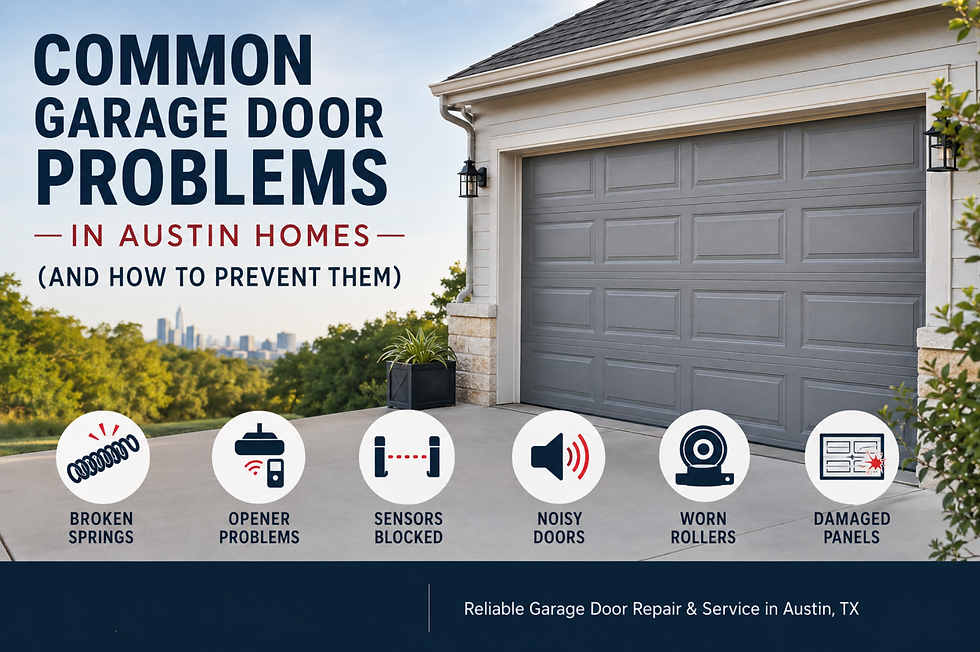
Garage doors are designed to operate thousands of times over their lifespan, but that doesn't mean they're maintenance-free. Between everyday use, aging components, and the hot Central Texas climate, Austin homeowners can eventually encounter everything from noisy rollers to broken springs and garage doors that refuse to open.
The good news is that many major garage door failures give you warning signs first.
Knowing what to watch for—and taking a few preventative steps—can help you catch problems early and potentially avoid an unexpected breakdown.
Here are some of the most common garage door problems found in Austin-area homes and what you can do to help prevent them.
1. Broken or Worn Garage Door Springs
Garage door springs do much of the heavy lifting required to raise and lower your garage door. Over time, repeated opening and closing cycles cause the metal to fatigue.
Eventually, a spring can break.
Common signs of a spring problem include:
A loud bang coming from the garage
A garage door that suddenly feels extremely heavy
A door that only opens a few inches
An opener that runs but struggles to lift the door
A visible gap in the torsion spring
Springs don't last forever, so a broken spring can't always be prevented. However, keeping the entire garage door system properly maintained can reduce unnecessary strain.
If your door suddenly becomes difficult to open, starts moving unevenly, or you notice changes in its operation, have it inspected rather than continuing to operate it.
Important: Garage door springs are under significant tension and can cause serious injury. Spring adjustment and replacement should be left to a trained garage door technician.
2. Garage Door Opener Problems
You press the remote and...nothing happens.
Before assuming the opener itself has failed, check the simple things first:
Are the remote batteries dead?
Does the wall switch work?
Is the opener receiving power?
Are the safety sensors blocked?
Has the door accidentally been disconnected from the opener?
If those aren't the problem, you could be dealing with worn opener components, electrical issues, incorrect limits, or another mechanical problem with the garage door itself.
Prevention Tip
Don't ignore an opener that suddenly sounds different, operates more slowly, or struggles to move the door. An opener shouldn't have to compensate for a garage door that has become unusually heavy or difficult to move.
3. Garage Door Won't Close All the Way
A door that opens normally but refuses to close is another common garage door problem.
One of the first things to inspect is the photo-eye safety sensors located near the bottom of the garage door tracks.
If something blocks the sensors—or they become dirty or misaligned—the opener may interpret that as an obstruction and reverse the door.
How to Prevent It
Periodically check the area around your sensors and keep them clean and unobstructed.
Avoid storing boxes, lawn equipment, tools, or other items directly in front of them.
If the sensors appear clear but the door continues reversing, it's time to have the system inspected.
4. Noisy Garage Doors
A garage door doesn't have to be silent, but new or unusually loud noises shouldn't be ignored.
You may hear:
Squeaking
Grinding
Rattling
Popping
Scraping
Banging
Different noises can point to different problems, including worn rollers, loose hardware, inadequate lubrication, damaged tracks, spring issues, or other components beginning to fail.
Prevention Tip
Pay attention to how your garage door normally sounds. A noticeable change can be one of the earliest indications that something needs attention.
Regular garage door maintenance and appropriate lubrication of designated moving components can also help reduce wear and noise.
5. Garage Door Comes Off the Track
A garage door that has come partially or completely off its track can become dangerous very quickly.
Possible causes include damaged rollers, bent tracks, broken cables, an impact with the door, or another mechanical failure.
You may notice the door:
Hanging unevenly
Shaking significantly during operation
Becoming stuck at an angle
Leaving a roller outside the track
What Should You Do?
Stop operating the door.
Continuing to use an off-track garage door can cause additional damage and potentially cause the door to fall. This isn't a good candidate for a DIY repair.
6. Broken or Frayed Garage Door Cables
Garage door cables work with the springs to help safely raise and lower the door.
Because these cables operate under tension, wear can eventually lead to fraying or failure.
Warning signs may include:
Visible fraying
Loose cables
A garage door hanging unevenly
Jerky operation
A cable visibly hanging near the door
Prevention Tip
Visually inspect your cables periodically, but don't attempt to adjust or repair them yourself. If you see fraying, corrosion, or other damage, schedule professional service before the cable fails completely.
7. Garage Door Opens or Closes Unevenly
Does one side of your garage door appear higher than the other?
Uneven operation can indicate several potential problems, including cable, spring, track, or roller issues.
Ignoring the problem can place additional stress on other parts of the system.
Prevention Tip
Watch the door as it travels up and down occasionally. It should move relatively smoothly and evenly.
If it begins tilting or jerking, have the problem diagnosed early.
8. Worn Garage Door Rollers
Rollers guide your garage door along its tracks every time it opens and closes. As they wear, the door may become louder or move less smoothly.
Signs of roller problems can include:
Excessive vibration
Grinding or squeaking
Jerky movement
Visible roller damage
Rollers that no longer travel smoothly through the track
Replacing badly worn rollers before they fail can help prevent additional stress on the garage door system.
9. Damaged Garage Door Panels
Austin homeowners may also encounter dented or damaged garage door panels from vehicles, lawn equipment, storms, or everyday accidents.
A small cosmetic dent may not affect operation. More substantial damage, however, can interfere with how the door travels through the tracks or affect the integrity of the door.
Depending on the door and extent of the damage, it may be possible to replace individual panels instead of replacing the entire garage door.
10. Garage Door Weather Seal Damage
The weather seal along the bottom and sides of your garage door helps keep outside air, water, dirt, insects, and debris from entering your garage.
Over time, Texas heat and normal aging can cause these materials to crack, harden, or pull away.
Check the seal periodically for visible gaps or deterioration. Replacing damaged weatherstripping can improve the seal between your garage and the outdoors.
How Austin's Climate Can Affect Your Garage Door
Austin's climate can be hard on outdoor and garage components.
Extended periods of heat, temperature changes, humidity, storms, and everyday exposure can contribute to deterioration of lubricants, seals, electronics, and moving components.
That makes preventative garage door maintenance especially worthwhile for Central Texas homeowners.
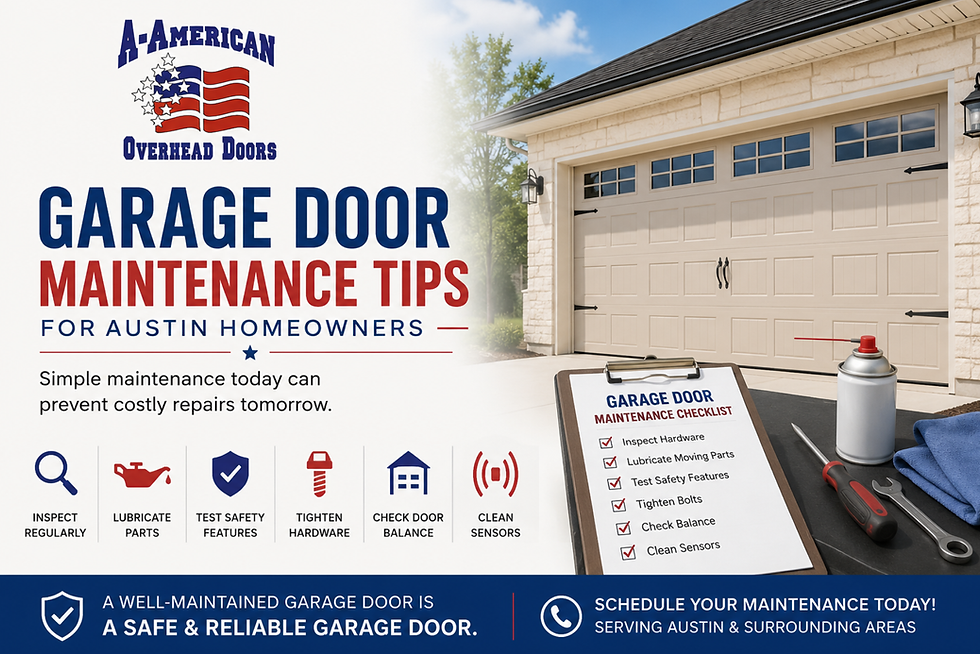
A Simple Garage Door Maintenance Checklist
You don't have to wait for something to break before paying attention to your garage door.
Every few months, take a few minutes to:
Watch the door open and close
Listen for new or unusual noises
Check for loose or visibly damaged hardware
Inspect rollers for obvious wear
Look at cables for visible fraying
Keep tracks free of debris
Keep safety sensors clean and unobstructed
Inspect weather seals for deterioration
Use the appropriate garage door lubricant where recommended
Schedule professional service if anything looks or sounds unusual
Never attempt to adjust springs, cables, or other high-tension components yourself.
When Should You Call a Garage Door Professional?
Some garage door issues require professional attention immediately.
Call for service if:
A spring has broken
A cable is damaged or hanging loose
The door has come off its track
The garage door is hanging crooked
The door suddenly won't open or close
You hear a loud bang or severe grinding
The opener is struggling to lift the door
The door unexpectedly falls or closes too quickly
Continuing to operate a damaged garage door can turn a relatively straightforward repair into a more extensive one.
Need Garage Door Repair in Austin? Call A-American Overhead Doors
When something doesn't seem right with your garage door, catching the problem early can make a big difference.
A-American Overhead Doors provides professional garage door repair for homeowners throughout Austin and surrounding Central Texas communities. The company services major garage door and opener brands and handles common problems including broken springs, damaged cables, off-track doors, noisy garage doors, opener problems, panel replacement, and garage door installation.
A-American Overhead Doors serves Austin and communities within approximately 40 miles, including Cedar Park, Round Rock, Pflugerville, Georgetown, Liberty Hill, Leander, Hutto, Lakeway, Lago Vista, Oak Hill, and Dripping Springs.
Whether your garage door has already stopped working or you're noticing the first signs of a problem, professional service can help keep the system operating safely and reliably.
Need garage door repair in Austin? Contact A-American Overhead Doors to schedule service or request a free repair estimate.

Comments